
Dianne Williamson
Armed with years of meticulous planning and a singular vision, Allen Fletcher had finally accomplished his ambitious goal for the city’s canal district.
The Worcester Public Market was the centerpiece of his $21 million redevelopment project — a European-style marketplace with dozens of independent vendors, all housed in a sunny yellow building near Kelley Square. When it opened, excited crowds flocked to sample the shops, and Fletcher could envision the growing potential of the neighborhood he calls home.
What no one could envision was the timing: February of 2020, five weeks before the Covid epidemic. Like much of the world, the market was forced to shut down. While vendors cooled their heels, Fletcher didn’t charge them rent. The reopening came that June. Slowly, the crowds returned and the marketplace survived.
Flash forward to a recent evening in the same marketplace, at a cozy restaurant called TapaVino, where Fletcher sat for dinner and drinks with his long-time companion, the charming Dolly Vasquez. Outside the restaurant, patrons shopped in specialty stores and enjoyed international dishes in the food court.
“I never think, ‘I did this,’ “ Fletcher said. “But this is my neighborhood, my domain. This is where we’ve staked our claim.”
Few can claim a neighborhood stake like Fletcher, who built a career out of seeing possibilities where others saw only empty space and urban decay. This is not his biography, so I can hardly outline his myriad accomplishments in such varied fields as publishing, business, historic preservation and urban design. Besides, Fletcher insists his vision was borne from the simplest of motives.
“I wanted to live in the city,” he said. “I didn’t have any messianic desire. I just wanted to help; I wanted to create life on the street. It’s based on an idea that there’s so much more to a city and to life than going to work and going home.”
Speaking of home, the affluent Fletcher could have lived anywhere. But in 2001, he bought the old Ash Street School in the center of the district and renovated it into a mixed-used property. He moved to the third floor, where he still lives, while Vasquez settled into an apartment on the first floor.
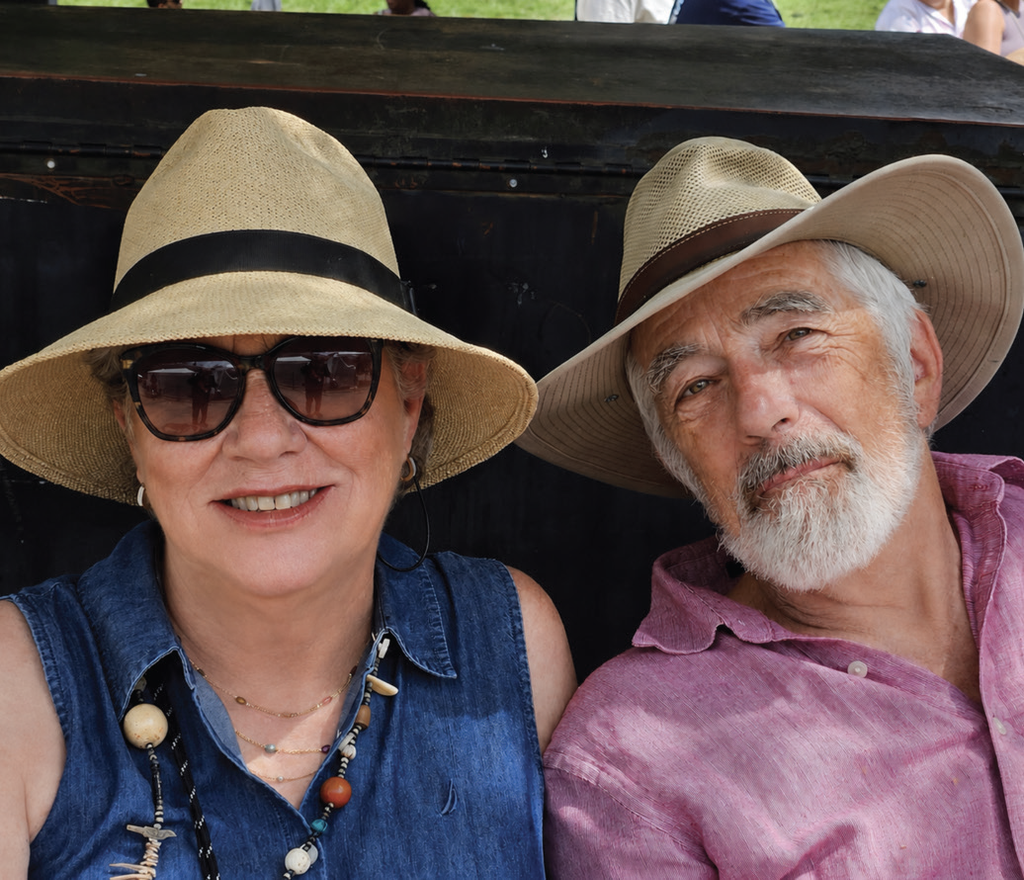
“That’s why we’ve been together for 25 years,” Vasquez said with a laugh.
In the early days, Fletcher and other Canal District advocates met every Wednesday for 15 years to develop a plan for the neglected area, once a thriving working-class immigrant enclave that had fallen on hard times. The restoration of Union Station and the return of commuter rail service helped make the area attractive to investors.
And, of course, there was Fletcher. During the 2000s, old commercial and industrial buildings were transformed into restaurants, nightclubs, shops and residential developments. Then came the Public Market, followed in 2021 by the opening of Polar Park.
Initially, Fletcher wasn’t a fan of the ball park, concerned that the businesses around it would suffer. Eventually he came around, and today doesn’t even mind when a stray baseball ends up in his garden.
“How can you resist it?” he said. “How can you be against it? The park has become surprisingly simpatico with the neighborhood. On game days, Dolly and I sit on our porch and watch the crowds. And the market is packed. It’s all founded on the joy of human congregation.”
TapaVino is one of the newer additions to the Public Market and features creative small plates designed for sharing. As we dove into our tasty torched oysters and meatballs, Fletcher, who turned 78 last month, acknowledged that recent health issues have slowed him down a bit.
“I’m tired,” he acknowledged. “I can still multi-task, but I don’t want to. There’s tons to do but it’s coming along.”
The biggest challenge these days is what Fletcher calls the “street people” who gather outside and disrupt businesses. Many merchants have voiced complaints ranging from suspected drug dealing to trash and illegal dumping. He and Vasquez fear the area’s economic progress could be jeopardized if people no longer felt comfortable visiting.
“It’s a curse on the businesses and everything we want to do,” Fletcher said. “I’d love for them to go away.”
But where?
“I haven’t figured that out yet,” he admitted. “It’s a societal problem.”
He still walks through the canal district every day — “I kind of make it my business,” he said — and credits the area’s success with the “individual energy” of those who shared his dream of a walkable, vibrant city.
“I’ve always described Worcester as a city of perpetual potential,” he said. “We’ve managed to convince people that the energy is down here.”
What’s next? He shrugged and smiled broadly.
“Wherever the good energy takes us.”