
Sara Arnold
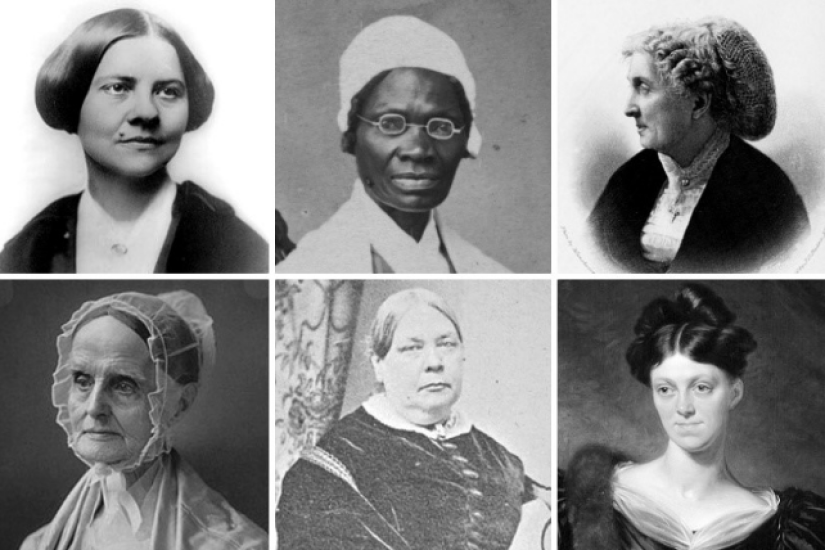
A national women’s convention has been called for October 22th and 23rd in Worcester at Mechanics Hall. This isn’t just any women’s convention though, it marks the 175th anniversary of the first National Women’s Rights Convention. In October 1850, over 1,000 people gathered in Brinley Hall, sparking a global movement with the help of luminaries like Sojourner Truth and Frederick Douglass.
Women’s rights began in Worcester, which was the center of radical abolitionist activities and the fight for women’s equality.
Exactly 175 years later, the Worcester Women’s History Project (WWHP) at the Museum of Worcester (MOW), along with their partners, are bringing history to life with a two-day convention exploring women’s rights then and now, honoring the women who changed centuries.
“Interestingly enough, the issues have not really changed, and that is one of the reasons we focused on creating programs that highlight this: Education, pay equity, women’s reproductive health, and many other reforms that are still questionable or becoming issues again under the prevailing de-evolution of DEI,” said Barbara Guertin, the Chief Operating Officer of the Museum of Worcester.
Attendance, like the first convention, is expected to exceed 1,000 people with a national audience. A second convention was held in Worcester in 1851, with only a handful of others after that. With the last one, marking the 150th anniversary in 2000, also in Worcester.
The first convention “created a forum for subsequent debate concerning the state constitution, addressing issues like suffrage, education, property rights, and wages,” Guertin said. This resulted in petitioning the Massachusetts Constitutional Convention in 1853. Delegates asked that the word “male” be stricken, that women be allowed to vote on amendments, and that women have access to higher education.
According to the event’s leaflet, it laid the groundwork for future movements, including suffrage, civil rights, and reproductive justice. The first permanent women’s rights organizations and the first women’s rights newspaper were founded in collaboration with anti-slavery activists and others.
Worcester County led the state in advocating for constitutional reform, supported by most delegates, although the rest of Massachusetts voted differently.
The march toward progress could not be stopped. In 1855, Massachusetts became the first state to allow women to keep their property after marriage and to keep their own wages.
The 175th anniversary offers a rare opportunity to re-center Worcester’s pivotal role in shaping the course of American democracy and gender equality.
There will be speakers, panels, plays, films, performances, an oral history project, and even fashion shows. Exhibits will include displays of women’s clothing through the ages.
Guertin explained that dress reform was a major topic in 1850, “because of the absurdity of social customs. Women were supposed to wear a corset and up to 7 petticoats. As much as we think times have changed, it was only in the late 1970s that women were allowed to wear pants to work and school.” Worcester was also a major center of the worldwide corset industry.
While the convention led to immediate changes in Massachusetts women’

s legal status, it also paved the way for other milestones such as the Emancipation Proclamation abolishing slavery, the Fifteenth Amendment giving Black men the vote, and the Nineteenth Amendment granting women the right to vote.
“Over 150 years later, however, the historic struggle for ‘equality before the law without distinction of sex or color’ continues,” Guertin said.
Youth delegates will also participate. “Worcester Public Schools are sending high school students from all five schools. Notre Dame Academy, Worcester Academy, and Abby Kelley Foster Charter School are sending student delegates. Holy Cross and Clark University will be sending entire classes,” Guertin noted.
For tickets to one or both days, or to attend The Harvey Ball, visit mechanicshall.org. Free and discounted tickets are available through low-income arts outreach programs, though these do not include The Harvey Ball.